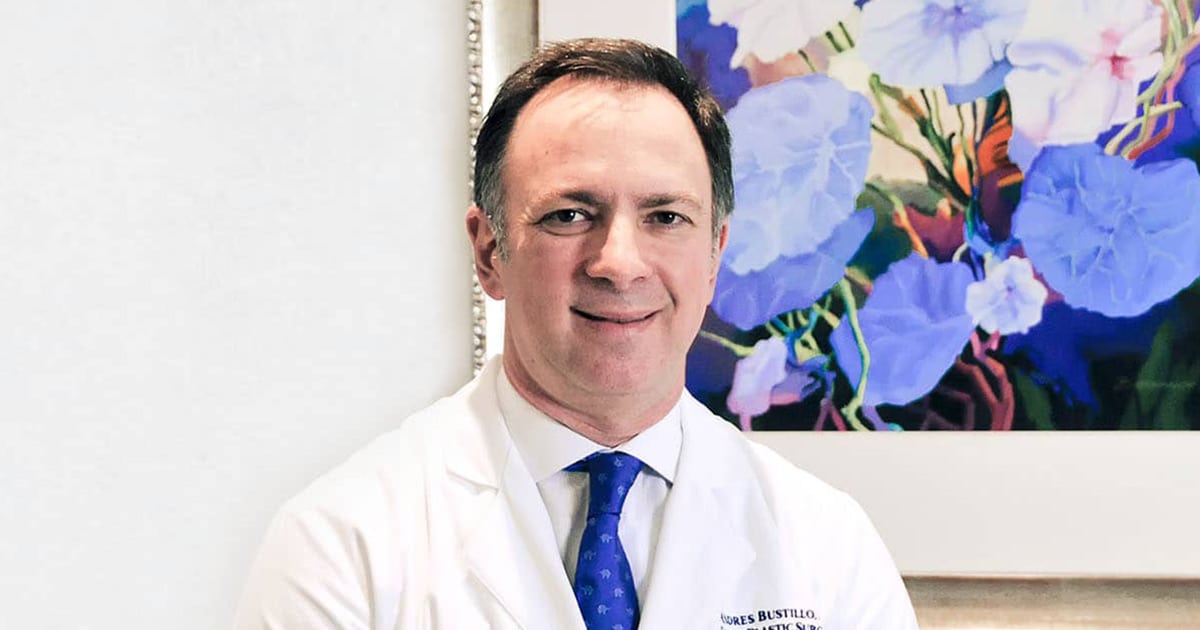
More and more, patients are asking me a version of the same question: can AI imaging predict deep plane facelift results before they ever commit to surgery? Artificial intelligence has moved from a novelty into everyday tools across medicine, and facial plastic surgery is no exception. My honest answer is that AI imaging can be a useful starting point for a conversation, but it cannot promise the face you will see in the mirror months after your procedure.
I am Dr. Andres Bustillo, a double board-certified facial plastic surgeon in Miami, Florida. I have spent more than 20 years working only on the face, head, and neck, with over 15 of those years devoted to the deep plane approach to facelift surgery. I welcome helpful technology into my practice, and I also believe patients deserve a clear, grounded sense of what these tools can and cannot do.

Key Takeaways on AI Visualization and Cosmetic Surgery Outcomes
- AI imaging can preview a possible direction, but it cannot guarantee your surgical results.
- Your anatomy, skin, and healing shape the outcome far more than any software can.
- AI tools work best as a communication aid during a consultation, not as a promise.
- Research on artificial intelligence in plastic surgery is promising but still early.
- A skilled surgeon, not an algorithm, plans and performs your facelift.
Why Patients Are Curious About AI Facelift Imaging
It makes sense that patients are curious. Before any meaningful decision, we want to picture the result ahead of time. AI facelift imaging offers exactly that, a quick visualization of how a firmer jawline or lifted cheeks might look on your own photo. These tools tap into a very human wish to manage patient expectations and to feel informed before facial surgery. It is one of the most talked-about ideas in plastic surgery right now.
I see this curiosity as healthy. A patient who has thought through their goals tends to have a better consultation. The trouble starts only when a simulated image is mistaken for a guarantee, because a facelift result is built from living tissue, not pixels.
What AI Imaging Can Show Before Deep Plane Facelift
Used well, AI imaging can do some genuinely helpful things. Modern software can run a facial analysis of your photographs, build a basic 3D imaging model, and produce a simulated preview of a possible direction. Some systems use facial mapping to estimate how soft tissue sits over your bone structure.
Researchers studying AI in plastic surgery describe these as outcome prediction and decision support tools. A thoughtful plastic surgery simulator can help a patient and surgeon get on the same page, giving us a shared reference during planning. As a way to open an honest discussion about realistic goals, that visualization has real value.
What AI Imaging Cannot Predict for Facial Plastic Surgery
Here is where I set expectations honestly: the capabilities of AI are real but limited. A simulation is a picture, not a surgical outcome. It does not know how your tissues will behave during surgery, how your skin will redrape, or how you will heal.
Studies in facial plastic surgery make this point clearly. Aesthetic results are hard to measure objectively, and models trained on one group of patients often lose accuracy when applied to another. An image flattens the living detail of your facial anatomy into something a computer can edit, and that is exactly what your face is not.
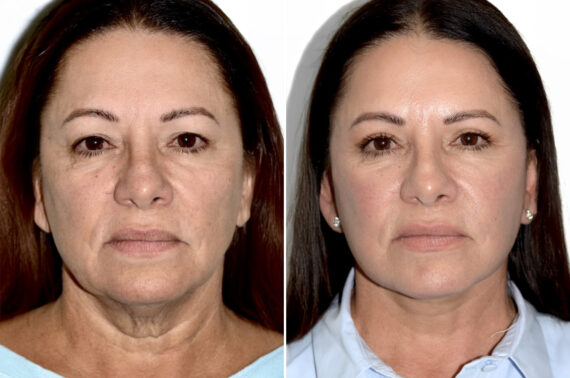
Why Deep Plane Facelift Results Depend on Anatomy
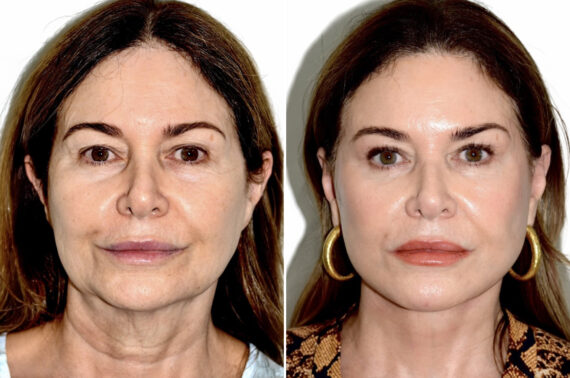
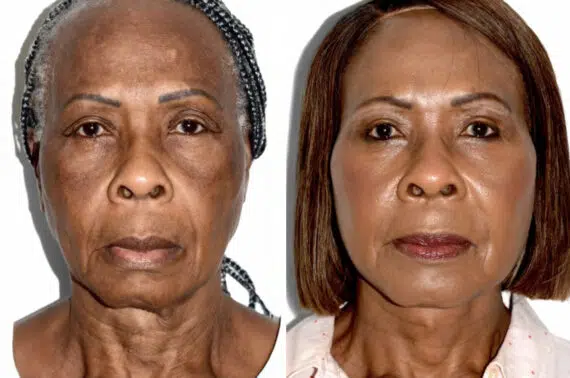
The deeper reason AI cannot promise a result is simple. A facelift works on your living anatomy, and every face is different. The deep plane technique repositions tissue beneath the surface, so the outcome depends on structures a flat photo cannot capture.
Skin Quality and Elasticity
Skin that is thick, thin, sun-damaged, or highly elastic responds differently to a lift. Two patients with nearly identical photos can heal and settle in very different ways.
Facial Tissue Descent
How far the cheeks and midface have dropped changes how much I need to release and reposition. Good facial rejuvenation restores support rather than simply smoothing a screen image.
Bone Structure and Facial Proportions
Your underlying bone gives the soft tissue its scaffolding. Facial analysis software can estimate this, but it cannot feel the ligaments or judge proportion the way an experienced surgeon does in person.
Neck Aging and Jawline Support
Much of a modern facelift result lives in the neck and jawline. Loose platysma bands and fat beneath the chin behave in ways no image can fully predict.
Healing, Swelling, and Scar Behavior
Swelling, bruising, and scar maturation all unfold over time, and recovery varies from one person to the next. A simulated face never swells, so it cannot show your true facelift recovery or your final result.
The Difference Between AI Images and Surgical Planning
This is the heart of the matter. An AI image is a friendly preview. Surgical planning in plastic surgery is a medical process. When I plan a case, I combine a physical exam, your goals, and my surgical technique with the kind of mental facial mapping that years of operating teach you.
The research community frames artificial intelligence as a partner to the surgeon, useful for surgical planning and patient communication, yet not a replacement for judgment. I agree. The role of AI is to offer decision support and helpful insights. It cannot make the decision or perform the surgery.
Questions about your procedure?
Schedule a consultation with Dr. Andres Bustillo.
What Research and Future Trends Suggest About AI in Facial Aesthetics
Where is this heading? Research and future trends point toward more capable tools. Systematic reviews describe artificial intelligence spreading across plastic surgery procedures, from facial aesthetics to body contouring, and into AI-assisted surgical robotics aimed at greater surgical precision. Newer generative systems may one day produce more photorealistic previews and sharper surgical outcomes assessment than today’s software.
Even so, the same studies stress that these AI technologies work best alongside surgeons and patients, supporting personalized care and recovery rather than replacing the human surgeon. AI is now being studied from preoperative planning to postoperative assessment and care across plastic and reconstructive surgery, including postoperative monitoring of healing. I follow these aesthetic trends closely, and I am optimistic about the future of these aesthetic treatments. The benefits arrive only when a careful surgeon stays firmly in charge and patient safety comes first.
How Dr. Bustillo Uses Consultation to Plan Realistic Results
In my Miami practice, the consultation is where realistic planning truly happens. We take the time to examine your skin, bone, and neck, talk through your goals, and explain which surgical options actually fit your face. If an AI image helps us communicate, I am glad to use it as one input among many.
I weigh different surgical approaches against your anatomy and your priorities, including the longevity you want from your results. When it makes sense, I discuss adding procedures such as eyelid surgery or fat transfer, always with preservation of your natural expression in mind. My job is to translate a hopeful image into an honest, achievable plan.
Schedule a Deep Plane Facelift Consultation in Miami
Call my Miami office at 305-663-3380 to schedule your consultation.
Frequently Asked Questions
No. AI imaging can suggest a direction, but it cannot show exactly how you will look. Your healing, your anatomy, and the surgical technique all shape the final result in ways software cannot fully model.
It can be, mainly as a communication tool. A simulated image gives us a shared reference during planning and can make patient communication easier. I treat it as a conversation starter, not as a forecast of your facelift surgery results.
Because a real face is living tissue. Swelling, skin behavior, fat, and bone all influence recovery and the outcome, and an image cannot predict those. The capabilities of AI keep improving, but your results still depend on real anatomy and real surgical skill.
About the Author
Dr. Andres Bustillo is a double board-certified facial plastic surgeon based in Miami, Florida, who has devoted his career to surgery of the face, head, and neck. He has written peer-reviewed articles and book chapters on facial plastic surgery, including work on the deep plane facelift, and he is a frequent local media voice on advances in facial rejuvenation. Alongside his cosmetic surgery practice, he has joined reconstructive surgery missions abroad to repair cleft lip and palate in children. He sees new tools such as artificial intelligence as useful additions to a surgeon’s judgment, never a substitute for the artistry and experience behind a natural result.