Ever wonder why your nose can look bigger after rhinoplasty surgery? You pictured a small, attractive nose, yet the mirror shows a different size right now. Take a breath. Early healing often plays tricks on perception, and the process has phases that explain what you are seeing today in reality.
In this article, you will understand the normal healing timeline, what changes to expect, and how to judge progress with confidence. We will map the common reasons your nose looks fuller, what to do about it, and when it is time to ask specific questions calmly and clearly. In many cases, this “bigger” appearance shows up in specific ways, such as the nose looking wider, the nostrils appearing more visible, or one side seeming slightly uneven during healing.
Why is My Nose Still Big After Rhinoplasty?
Your nose’s appearance in the early months can seem different after surgery because healing is a journey, not a switch. A surgical procedure triggers predictable responses that influence contour and size. Several factors play a role, from rhinoplasty swelling to temporary stiffness, lymphatic sluggishness, and scar maturation.
Most patients improve steadily as tissues relax and definition returns. Expect the upper third to refine first, then the tip. Timeframes vary by skin thickness and technique, so patience is essential before judging significant changes or considering further steps and options ahead thoughtfully.
1. Original Nose Shape
What you started with matters. The nose is a framework of bone, cartilage, skin, and soft tissue, and that existing structure sets the rules for how it heals and refines. If you had a strong dorsal hump, a wide base, bulbous tip, or asymmetric nostrils, those features can influence early swelling patterns and how definition returns. Skin thickness is key, too. Thin skin reveals detail sooner but can show minor irregularities; thick skin hides fine contours at first and often needs more time to contract and drape.
Internal support also impacts the final shape. Tip cartilages, septal strength, and the width of the nasal bones determine how well the nose maintains projection and symmetry as swelling resolves. Even with precise technique, the tissues must adapt to their new configuration, which is why two patients with the same surgical plan can look different at three months. Understanding your baseline helps set realistic expectations for timing, refinement, and the path to a balanced, natural outcome.
2. Post-Surgery Swelling
Post-operative swelling is the number one reason the nose looks bigger in the early stages. Right after cast removal, what you see is mostly initial swelling, not the true contour beneath. The nasal bridge and tip often retain fluid and inflammation for weeks, with the lower third staying fuller the longest. Some patients experience significant swelling that fluctuates throughout the day, especially when waking up or after physical activity.
This is normal and part of the healing process. However, it can be confusing when the nose appears to grow or shrink depending on the lighting or angle. Persistent swelling can last several months, particularly in thicker skin types. Consistent taping, gentle lymphatic massage if recommended, and patiently allowing the tissues to soften will gradually reveal a slimmer and more defined shape over time.
3. The Recovery Process
Recovery unfolds in phases, and like with any type of facial surgery, it is guided by biology more than the calendar. In the first two weeks, swelling dominates and bruising fades. By six to eight weeks, most daily swelling settles, but the tip and lower third remain firm as the healing process continues beneath the surface. The tissues remodel slowly through collagen maturation and improved lymphatic flow.
This is why profiles sharpen first while the tip lags. Expect visible refinement across the first three months, and then more subtle definition over several months after that. Many patients see meaningful improvement at six months, while final results can take up to a year or longer for thicker skin. During this time, sleeping with the head elevated, avoiding salt excess, gentle activity, and any surgeon-recommended taping helps. Photos taken at consistent angles and lighting will give a clearer, calmer view of progress than the mirror on a single day.
4. Surgeon’s Expertise
Not all facial plastic surgeons approach nose surgery the same way. The level of training, case volume, and attention to detail directly influence both the immediate refinement and long-term stability of the outcome. A skilled surgeon understands how much cartilage to remove versus preserve, how to reinforce support, and how to adapt surgical technique to different skin types and anatomical variations.
Over-reduction can lead to collapse or asymmetry, while under-correction may leave unwanted fullness. Precision in suturing, graft placement, and shaping is critical to how smoothly the nose heals and defines over time. When the surgeon balances structure with aesthetics, the result holds better and looks more natural throughout every stage of healing.
Questions about your procedure?
Schedule a consultation with Dr. Andres Bustillo.
5. How a Nose Can Appear Bigger After a Nose Job
Swelling and healing don’t affect every area of the nose the same way. As a result, the nose may appear bigger in different ways depending on where fluid collects and how the tissues settle.
Wide Nose After Rhinoplasty
It’s common for the nose to look wider in the early weeks after rhinoplasty, even when the goal was refinement. This is usually due to swelling along the nasal sidewalls and bridge, which softens definition and creates a broader appearance. In some cases, swelling in the tip can also make the upper part of the nose look wider by comparison.
Most obvious swelling improves in the first few weeks, but subtle thickening, especially at the tip, can take 6–18 months to settle fully. If the nose still looks significantly wider than expected after about a year, residual cartilage bulk or skin thickness may be a factor, not just swelling.
Big Nostrils After Rhinoplasty
If your nostrils look bigger after surgery, it’s often related to swelling in the tip and surrounding soft tissues. When the tip is swollen or slightly elevated during healing, the nostrils may appear more visible or flared than expected.
This is usually temporary. As the tip settles and swelling decreases over several months, the nostrils tend to look more balanced and proportionate to the rest of the nose. If the nostrils still look unbalanced or excessively wide after the first year, a revision or alar‑base adjustment may be an option.
One Nostril Bigger Than the Other After Rhinoplasty
It’s not unusual to notice that one nostril looks bigger than the other during recovery. Swelling is rarely perfectly even, and small differences between the two sides can make one nostril appear larger or shaped differently.
In most cases, this improves as swelling subsides and the tissues settle into their new position over months. If asymmetry remains very noticeable after 12–18 months, it may reflect cartilage positioning or scar tissue and should be evaluated by your surgeon.
Long or Pointy Nose After Rhinoplasty
Some patients feel that their nose looks longer or more pointy after surgery, particularly in the first few weeks. This is often due to swelling and temporary stiffness in the nasal tip, which can exaggerate projection and make the nose appear sharper than intended.
As the tissues soften and the tip relaxes over several months, the shape usually becomes more natural and balanced. If the nose still looks excessively long or sharply pointed after about a year, it may involve over‑projection or over‑rotation and should be discussed with your surgeon.
When to Consider Revision Rhinoplasty
For most patients, patience is key before making any big decisions. Primary rhinoplasty takes time to fully settle, especially when the nose has thicker skin or significant swelling early on. However, if a full year has passed and breathing remains restricted, asymmetry is pronounced, or nasal tip definition has not improved, it may be appropriate to discuss options with a specialist.
Revision surgery can solve many issues, from residual bumps to structural instability, but it is more complex because the bone, cartilage, and skin have already been altered. Choosing a surgeon with extensive revision experience is essential since scar tissue and weakened support make planning more delicate. When approached carefully with realistic goals, a second procedure can restore balance and confidence.
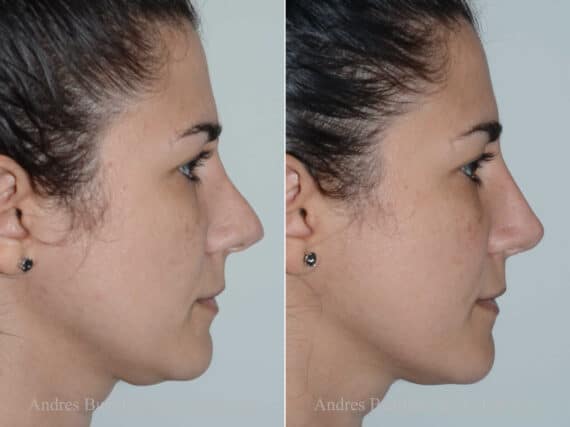
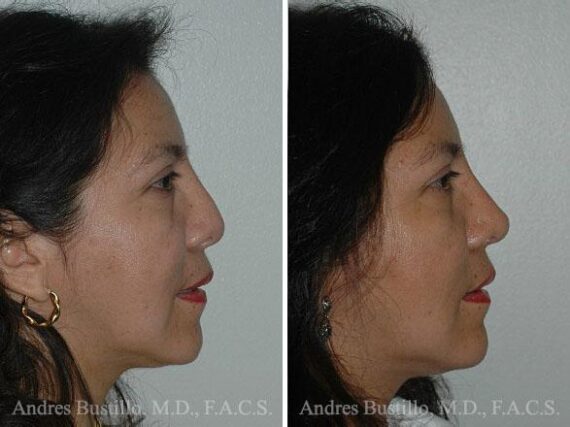
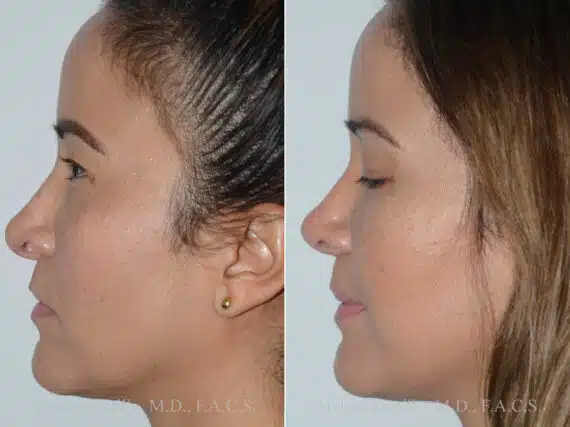
Choosing the Best Plastic Surgeon For Your Nose Job
Choosing a highly trained and experienced surgeon matters because the nose is complex in structure and function. Subtle millimeters determine balance, airflow, and harmony with your features. An expert guides planning, executes precise technique, and supports recovery, which together improve safety, predictability, and satisfaction over the long term.
Dr. Andres Bustillo is a board-certified specialist in facial plastic surgery with more than two decades of experience in Miami. Fellowship trained at the prestigious NYU–Weill Cornell program and recognized as a Top Doctor in Miami, he blends artistry with meticulous technique to deliver consistently natural rhinoplasty results. Call us at 305-663-3380 or visit our contact page to schedule a consultation.
Frequently Asked Questions
Swelling in the nasal sidewalls and tip can temporarily make the nose appear wider. This usually improves gradually over the first few months.
Tip swelling and healing changes can make the nostrils appear more visible early on. As the tip settles, the nostrils typically look more balanced.
Yes, uneven swelling is very common during recovery and can make one nostril look larger. This usually evens out as healing progresses.
Most visible swelling improves within a few months, but final refinement—especially in the tip—can take up to a year or longer.