For many patients, deepening smile lines are one of the first signs of aging they notice—and one of the hardest to address effectively. Nasolabial folds, the creases that run from the sides of the nose down toward the corners of the mouth, develop gradually as the face loses structural support and the cheek tissues descend. A deep plane facelift for nasolabial folds takes a different approach than surface-level treatments: rather than filling or smoothing these lines from the outside, it addresses the structural cause from within.
At the Miami practice of Dr. Andres Bustillo, double board-certified facial plastic surgeon, this advanced facelift technique is used to reposition the deeper facial tissues responsible for fold depth, creating a more natural and lasting improvement.

Key Takeaways: Deep Plane Facelift Surgery and Smile Lines
- Nasolabial folds deepen primarily because the cheek and midface tissues descend with age, not because skin loses volume alone.
- Fillers can soften early smile lines but cannot lift or reposition the descended tissues responsible for deeper folds.
- A deep plane facelift addresses nasolabial folds by releasing facial ligaments and elevating the midface as a structural unit.
- Candidates are typically patients with moderate to significant fold depth that no longer responds well to non-surgical treatments.
- Combining deep plane facelift surgery with procedures like fat grafting or blepharoplasty can create more comprehensive facial rejuvenation.
Why Nasolabial Folds Become More Noticeable Over Time
Smile lines are a natural feature of the face—they deepen when you smile and soften at rest. When they become a persistent concern, it is usually because of gradual structural changes in the face rather than a single cause. Several factors contribute to increasing fold depth over time:
- Cheek and midface descent. As the retaining ligaments of the face loosen with age, the cheek fat pad shifts downward, creating a shadow or crease along the nasolabial line even at rest.
- Loss of skin elasticity. Skin becomes less resilient over time, reducing its ability to rebound after movement or expression.
- Volume loss in the midface. Bone resorption and fat atrophy can flatten the cheeks, indirectly deepening the transition between the midface and the lower face.
- Repeated facial movement. Years of smiling and speaking gradually reinforce fold lines along the paths the skin follows most often.
- Changes in facial balance. As the lower face changes, the contrast between the midface and the area around the mouth becomes more pronounced, making nasolabial folds appear deeper.
Understanding why folds develop is important because it shapes which treatments will actually help. When the underlying cause is structural descent rather than volume loss alone, surface-level treatments have significant limitations.
Why Fillers Alone Don’t Always Fix Smile Lines

Dermal fillers are a useful tool for patients with early-stage nasolabial folds and minimal skin laxity. When the primary issue is mild volume depletion, carefully placed filler can soften the appearance of smile lines with little downtime and good short-term results. However, fillers do not lift or reposition the tissues that have descended—they add volume beneath the skin, which can temporarily obscure the fold, but the structural cause remains unchanged. In patients with more advanced aging, adding more filler to the nasolabial region can sometimes create unwanted fullness rather than a refreshed appearance.
When patients notice that filler results are becoming less satisfying over time, or that larger amounts are needed to maintain the same effect, it often signals that the aging has become structural. At that point, repositioning the tissues surgically may offer a more appropriate and lasting solution.
Deep Plane Facelift Techniques: How This Approach Differs
Not all facelift techniques address nasolabial folds with equal effectiveness. Traditional facelift techniques—including skin-only approaches and standard SMAS facelifts—do not fully release the retaining ligaments of the midface, meaning they can smooth the surface without lifting the descended cheek tissue that causes fold depth. The deep plane facelift goes further by working below the SMAS layer to release these ligaments and elevate the midface, cheeks, and lower face as a unified structural unit. This is what makes the deep plane approach particularly effective for smile lines: it lifts the tissue at its origin rather than compensating at the surface.
How a Deep Plane Facelift Procedure Softens Nasolabial Folds
During a deep plane facelift, Dr. Bustillo creates carefully planned incisions along the natural contours around the ear and into the hairline — placement that keeps surgical scarring as discreet as possible. Through these incisions, he accesses the deeper facial tissues beneath the SMAS layer using advanced techniques that distinguish deep plane surgery from more limited surgical procedures.
Key retaining ligaments — including the zygomatic and masseteric ligaments — are released, allowing the cheek fat pad and midface tissues to be elevated back toward their original, more youthful position. Because tension is placed on the deeper structural layer rather than the skin, deep plane techniques avoid the skin tension and distortion that can result from other techniques, including traditional SMAS facelift techniques that do not fully release these ligaments.
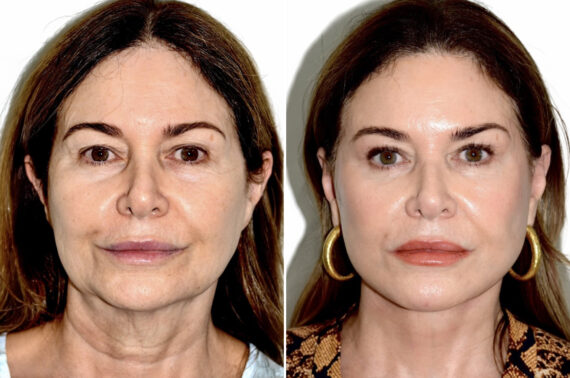
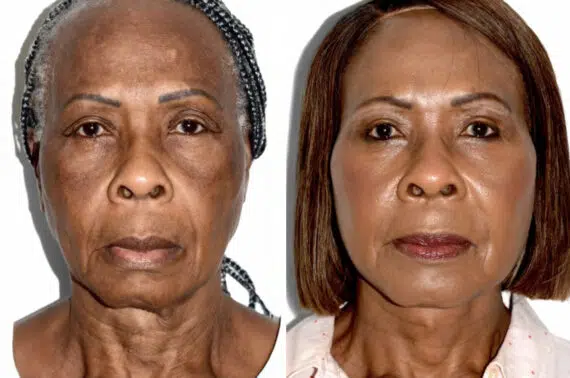
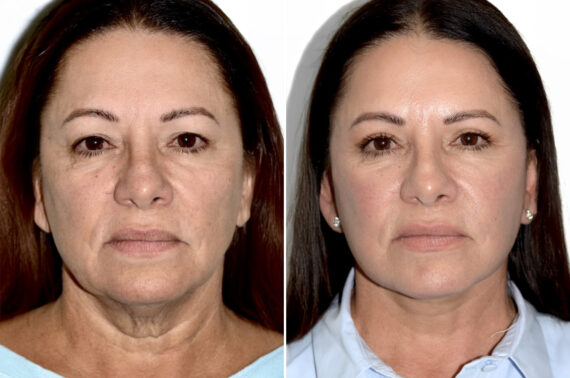
Because this repositioning is performed at the structural level, the skin naturally redrapes over the lifted tissue rather than being pulled. The result is a softening of the nasolabial fold that comes from the inside out — reducing the crease by addressing what caused it, rather than filling it from the outside. Dr. Bustillo also refines the jawline and tightens the platysma muscle during the same facial surgery, creating balanced, comprehensive improvement across the face and neck.
How a Deep Plane Facelift Procedure Softens Nasolabial Folds
During a deep plane facelift, Dr. Bustillo creates carefully planned incisions along the natural contours around the ear and into the hairline — placement that keeps surgical scarring as discreet as possible. Through these incisions, he accesses the deeper facial tissues beneath the SMAS layer using advanced techniques that distinguish deep plane surgery from more limited surgical procedures.
Key retaining ligaments — including the zygomatic and masseteric ligaments — are released, allowing the cheek fat pad and midface tissues to be elevated back toward their original, more youthful position. Because tension is placed on the deeper structural layer rather than the skin, deep plane techniques avoid the skin tension and distortion that can result from other techniques, including traditional SMAS facelift techniques that do not fully release these ligaments.
Because this repositioning is performed at the structural level, the skin naturally redrapes over the lifted tissue rather than being pulled. The result is a softening of the nasolabial fold that comes from the inside out — reducing the crease by addressing what caused it, rather than filling it from the outside. Dr. Bustillo also refines the jawline and tightens the platysma muscle during the same facial surgery, creating balanced, comprehensive improvement across the face and neck.
Recovery and Results: What to Expect from the Deep Plane Approach?
Recovery and results unfold gradually following deep plane facelift surgery. Swelling and bruising are normal in the first one to two weeks, with meaningful improvement visible as early healing progresses. Most patients feel comfortable in social settings by three to four weeks. Deep plane facelift recovery continues beyond the initial weeks — the cheeks, jawline, and midface refine over three to six months as tissues fully settle and facial rejuvenation becomes more apparent.
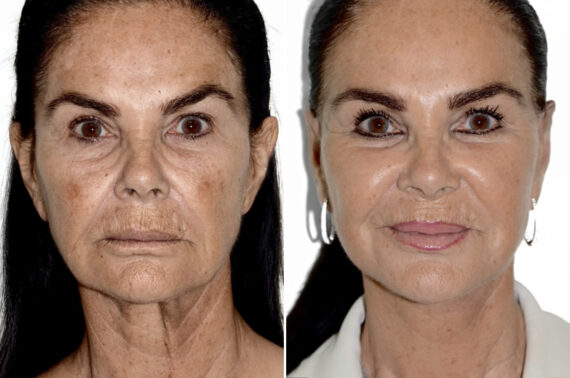
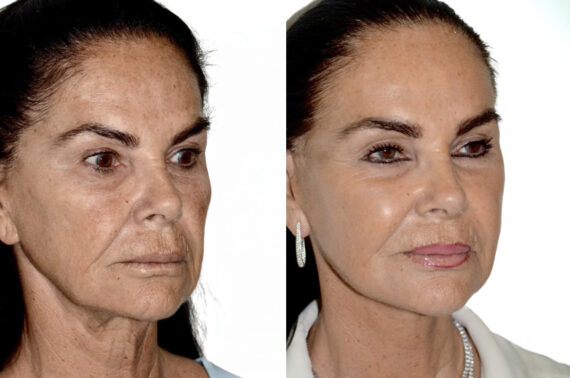
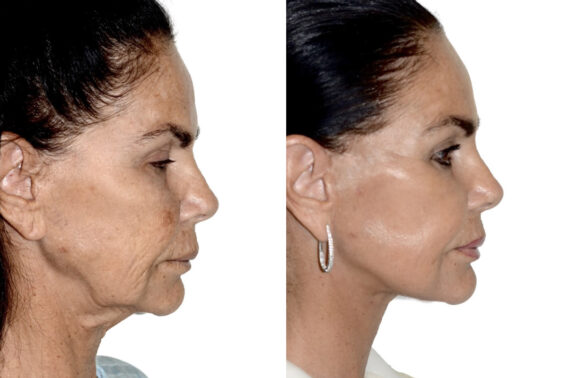
For nasolabial folds specifically, facelift results typically include a visible reduction in fold depth, improved midface definition, and a more balanced transition between the cheeks and the lower face. Because the deep plane facelift addresses facial aging at its structural source rather than tightening skin, results look natural and age gracefully over time. These lasting results reflect the durability of the deep plane approach — many patients find the improvement holds for ten years or more, aging from a more youthful baseline rather than reverting to the same structural pattern as before.
When Is a Deep Plane Facelift the Right Option?
Who May Be a Good Candidate
Patients who may be good candidates for a deep plane facelift include those with:
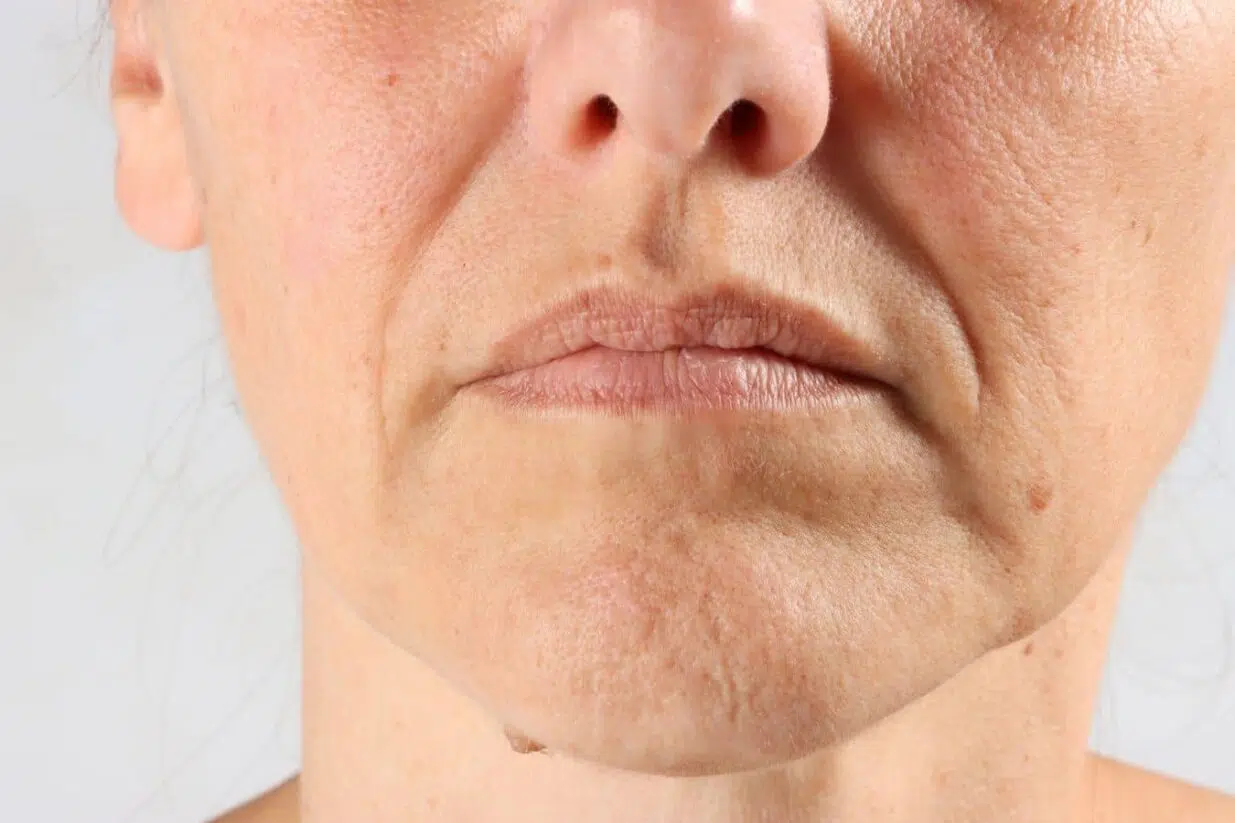
- Moderate to deep nasolabial folds that remain visible at rest
- Visible cheek descent or flattening of the midface
- Jowling along the jawline that affects overall facial balance
- Loose neck skin or early neck banding
- Previous filler treatments that are no longer producing satisfying results
Most candidates are in their 40s to 70s, though overall health and the degree of structural aging matter more than chronological age. Dr. Bustillo evaluates each patient individually during a deep plane facelift consultation to determine whether this level of surgical intervention is appropriate or whether a less extensive approach may be a better fit.
When a Mini Facelift or Non-Surgical Treatment May Be Sufficient
A mini facelift may be appropriate for patients with early jowling and minimal midface descent who are not yet ready for the scope of a full deep plane facelift. For patients with mild smile lines and good skin elasticity, non-surgical options may still offer meaningful improvement. During a consultation, Dr. Bustillo assesses where each patient falls on this spectrum and recommends accordingly.
Questions about your procedure?
Schedule a consultation with Dr. Andres Bustillo.
Can It Be Combined with Other Treatments?
Brow Lift
A brow lift addresses descent or heaviness in the upper third of the face, including the forehead and brow position. When combined with a deep plane facelift, it can produce a more harmonious overall rejuvenation across the full face rather than improvement limited to the midface and lower face alone. For patients whose facial aging involves both the upper and lower face, this combination may be worth discussing during the consultation.
Neck Lift
A neck lift can be incorporated alongside the deep plane facelift to refine loose neck skin and banding, extending the natural results of the facelift downward for a more complete and balanced outcome. For patients with visible neck laxity, combining these procedures in a single surgical session is often more effective than addressing each area separately.
Blepharoplasty
Eyelid surgery—blepharoplasty—addresses excess skin, puffiness, or hollowing around the upper and lower eyelids. Because the eyes are often one of the first areas to show age, combining blepharoplasty with a deep plane facelift can create a more balanced result. Dr. Bustillo performs both procedures and can evaluate whether eyelid refinement would add meaningfully to the overall plan.
Nano Fat Grafting
Where a deep plane facelift restores structural support and lifts descended tissue, nano fat grafting addresses skin quality at a finer level. Nano fat is produced by processing a small amount of the patient’s own fat into a smooth, liquid-like consistency that concentrates regenerative elements—including stem cells, growth factors, and stromal vascular fraction (SVF). Unlike structural fat grafting, which restores volume and contour, nano fat is injected superficially to improve skin texture, reduce crepey quality, lighten dark circles, and enhance overall radiance. Many patients benefit from both in the same procedure, with the deep plane facelift providing structural lift and nano fat addressing surface skin quality in delicate areas like under the eyes or around the mouth. The right combination depends on individual goals and is discussed during consultation.
Why Choose Facial Plastic Surgeon Dr. Andres Bustillo in Miami?
Dr. Andres Bustillo is a double board-certified facial plastic surgeon who has devoted his practice exclusively to surgery of the face and neck for more than 20 years. He holds certifications from both the American Board of Facial Plastic and Reconstructive Surgery and the American Board of Otolaryngology–Head and Neck Surgery, and completed his fellowship training at the NYU–Weill Cornell Medical College program. His individualized approach means every recommendation is based on what a patient’s anatomy and goals actually call for—not a default to surgery.
Credentials include:
- Double board-certified in facial plastic surgery and otolaryngology–head and neck surgery
- Fellowship-trained in facial plastic and reconstructive surgery (NYU–Weill Cornell)
- Over 20 years of experience focused exclusively on the face and neck
- More than 15 years performing deep plane facelift surgery
- Castle Connolly Top Doctor for more than 10 consecutive years
- Operates in an AAAASF-certified surgical facility in Miami, FL
Schedule Your Deep Plane Facelift Consultation in Miami
Deepening smile lines are one of the most common reasons patients begin exploring facial plastic surgery—and the deep plane facelift is one of the most effective tools available for addressing them at the structural level. If nasolabial folds have become a persistent concern and non-surgical treatments are no longer delivering the results they once did, a consultation can help clarify whether surgery is the right path forward.
Schedule a deep plane facelift consultation with Dr. Andres Bustillo in Miami to discuss your facial anatomy, treatment goals, and what the deep plane approach could realistically achieve for you.
FAQs About Deep Plane Facelift and Smile Lines
Fillers address volume loss but cannot reposition cheek and midface tissues that have descended with age. If filler results are becoming less satisfying over time, it may indicate that the aging has become structural—and that surgical repositioning would be more appropriate.
Not necessarily. For patients with mild fold depth and good skin elasticity, non-surgical options may still provide meaningful improvement. For those with moderate to significant folds accompanied by cheek descent or midface laxity, a deep plane facelift is often the most effective and lasting approach. A consultation helps determine which path is right based on individual anatomy.
There is no specific age that determines candidacy—the relevant factor is degree of structural aging. Most patients are in their mid-40s to late 60s, but healthy patients in their 70s can remain excellent candidates. Dr. Bustillo evaluates each patient individually to determine the right timing and approach.
Most patients feel comfortable in social settings within two to four weeks. Swelling and bruising improve steadily during this period, with final results continuing to refine over three to six months as tissues fully settle.