Many patients exploring facial plastic surgery want to understand how long deep plane facelift results will last and what changes they can expect as they continue to age. While every face ages uniquely, the deep plane facelift procedure is known for providing some of the most natural and longest-lasting improvements in facial rejuvenation. The answer to how long does a deep plane facelift last depends on anatomy, lifestyle, and the deep plane facelift technique itself, but most patients enjoy meaningful benefits for many years.

Understanding the Deep Plane Facelift and Its Advantages
The deep plane facelift differs from both the traditional facelift and the SMAS facelift by targeting the deeper layers of the face where true aging occurs. A skin-only or traditional facelift focuses primarily on tightening surface layers, while a SMAS facelift repositions the superficial muscular layer without fully releasing deeper ligament attachments. In contrast, the deep plane approach lifts facial structures from beneath the SMAS, allowing for a more comprehensive and natural rejuvenation.
Key advantages of the deep plane facelift include:
- Lifting of the cheek tissues, jawline, and midface from deeper anatomical layers
- Restoration of natural facial contours
- Softening of nasolabial folds with long-lasting results
- Reduced risk of a tight or over-pulled appearance due to minimal skin tension
This deeper repositioning improves multiple areas of the face and neck simultaneously. By freeing key ligaments and elevating the deeper layers as a single unit, the deep plane facelift creates durable results that maintain a natural appearance and age more gracefully over time.
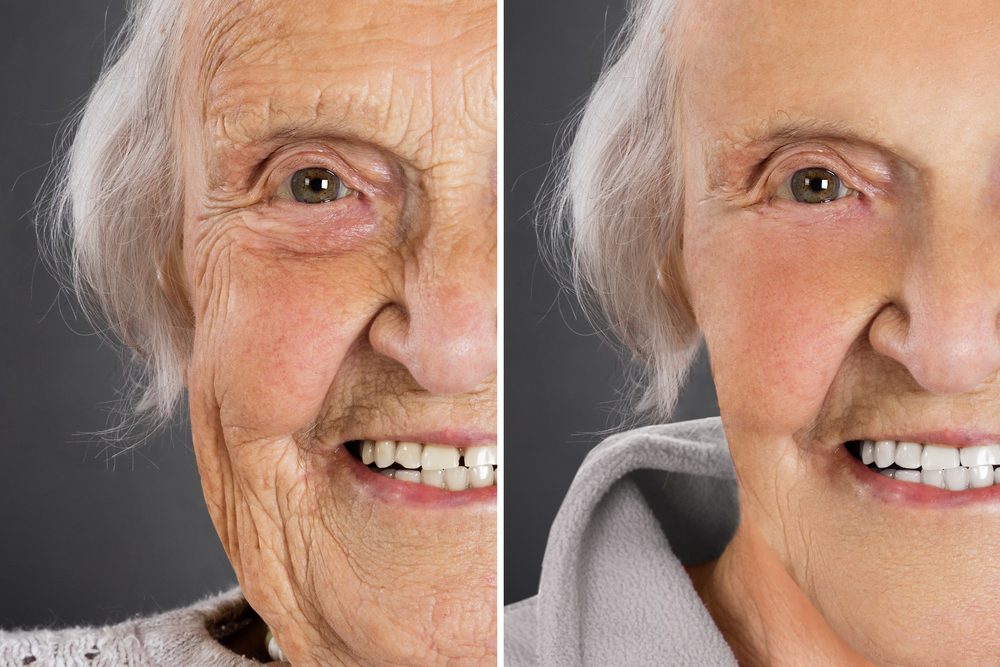
Average Longevity of a Deep Plane Facelift
Patients often enjoy visible improvement for 10 to 15 years or longer, depending on their unique anatomy and aging patterns. While the procedure does not stop the natural aging process, it resets the tissues to a more youthful position. Many individuals continue to look younger than they would have without surgery, even as the years pass.
Results typically begin to settle within several months as the facial tissues adapt to their new position. The structural lift achieved with the deep plane approach contributes to extended longevity compared to more superficial facelift procedures.
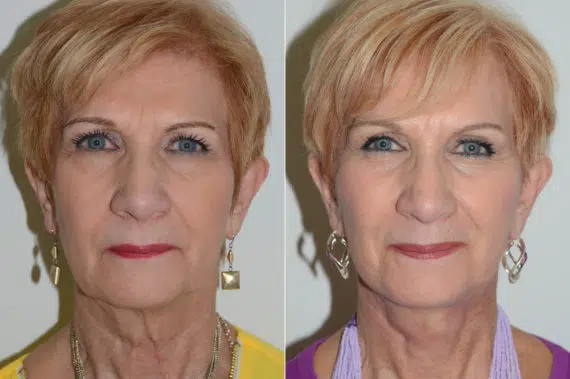
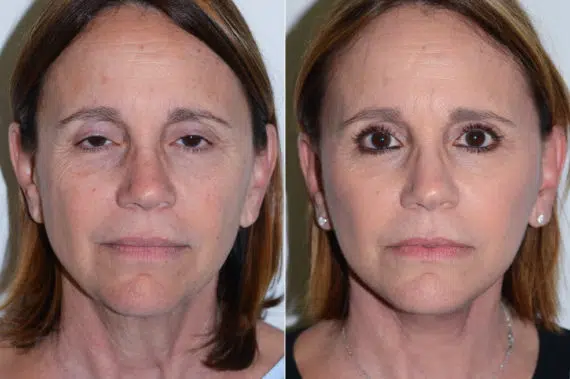
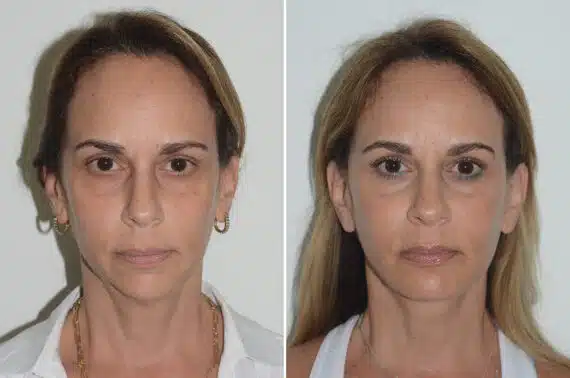
What Makes Deep Plane Facelift Results Last Longer?
Lifting the Deeper Facial Layers
A key advantage of this facelift surgery technique is that it elevates the deeper facial structures, not just the skin. By lifting the tissues that actually descend with age, the surgeon achieves results that both look and behave like younger facial anatomy.
Release of Facial Ligaments
Ligaments in the midface act as anchor points. Over time, these structures loosen and contribute to sagging in the cheeks and nasolabial folds. Releasing these ligaments allows the deeper tissues to reposition more effectively, enhancing the durability of the lift.
Natural Tension Distribution
Because the lift is applied to the deeper tissues rather than the skin surface, tension is distributed more evenly. This minimizes the risk of early relapse and helps maintain smoother skin and natural contour over time.
Preservation of Facial Expression and Softness
Working in the deeper planes avoids over-tightening the skin or distorting facial movements. This contributes not only to natural expression, but also to the longevity of the facial rejuvenation results.
Have questions about getting your best results
Schedule a consultation with Dr. Andres Bustillo.
Factors That Influence How Long Your Results Last
Age at the Time of Surgery
Patients in their 40s and 50s may experience longer-lasting benefits because their facial tissues typically retain more elasticity. Those in their 60s and beyond still achieve excellent improvement, but natural aging continues to influence long-term changes.
Skin Quality and Elasticity
Skin health, sun exposure, collagen levels, and hydration all affect how long results last. Healthier skin maintains the lift more effectively over time.
Genetics and Facial Anatomy
Inherited patterns of facial aging, bone structure, and soft tissue volume play a role in how the face changes over the years.
Lifestyle Habits
Sun exposure, smoking, weight fluctuations, and skincare routines influence the recovery period and the longevity of any surgical procedure, including deep plane facelift recovery.
Hormonal Changes and Natural Aging
Hormonal shifts can affect skin thickness, elasticity, and fat distribution. These changes occur gradually regardless of surgery, but the repositioned tissues typically continue to age in a more favorable way.
What Will You Look Like as You Continue to Age?
A deep plane facelift does not stop aging, but it significantly resets the clock. Five years after surgery, most patients still appear noticeably more refreshed than they would have otherwise. Around ten years after the procedure, some natural descent may reappear, but the cheeks, jawline, and neck generally remain more defined compared to pre-surgery appearance. Fifteen years out, aging continues at the individual’s natural pace, but the structural benefits of the procedure are often still visible.

Case Study
Deep Plane Facelift Exceeding Patient Expectations
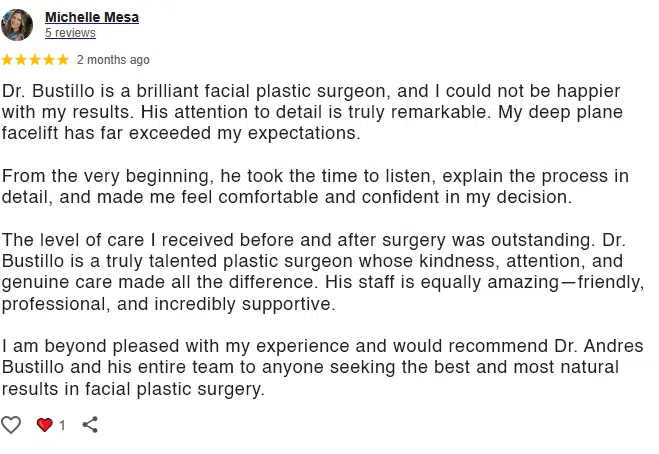
Patient: Michelle Mesa
Visit Type: Facial Plastic Surgery
- Deep Plane Facelift (Left)
How to Maintain Deep Plane Facelift Results
Skincare Routine
Maintaining high-quality skincare helps preserve smoother skin and overall facial health. Medical-grade products that support collagen and hydration can complement surgical results.
Sun Protection
Consistent use of sunscreen is one of the most important practices for prolonging results. Sun exposure contributes to wrinkles, pigmentation, and skin laxity.
Non-Surgical Maintenance Treatments
Botox, dermal fillers, and laser resurfacing can help maintain a youthful appearance as the face continues to age. Certain energy-based treatments may be helpful for some patients to support skin firmness, depending on individual needs
Healthy Lifestyle Choices
Good nutrition, consistent hydration, avoiding smoking, and maintaining stable weight all contribute to the longevity of facial plastic surgery results.

Why Trust Dr. Andres Bustillo for Long-Lasting Facelift Results
Dr. Andres Bustillo is a double board-certified facial plastic surgeon with over 20 years of experience focused exclusively on facial rejuvenation. His expertise in advanced techniques such as the Deep Plane Facelift allows him to address aging at its structural level — contributing to results that look natural and are designed to last. Credentials include:
- Double board-certified in facial plastic surgery and head & neck surgery
- Fellowship-trained in facial plastic & reconstructive surgery
- Extensive experience with deep plane facelift techniques
- Known for durable, natural-appearing facial rejuvenation results
Deep Plane Facelift vs Other Facelift Techniques
Deep Plane Facelift
The deep plane facelift procedure typically offers the most long-lasting and natural rejuvenation because it lifts the deeper structures responsible for facial aging.
SMAS Facelift
A SMAS facelift repositions the superficial muscular layer and provides good improvement, but without releasing deeper ligaments, the longevity may be shorter than the deep plane approach.
Mini Facelift
A mini facelift addresses mild laxity with a shorter recovery period but offers less dramatic and less durable improvement, especially in the midface and neck. Check more details on deep plane facelift vs Mini facelift
Signs That You Might Consider a Touch-Up or Secondary Facial Plastic Surgery Procedure
Patients may consider additional treatment if they notice the return of jowling, significant neck laxity, or new areas of volume loss. A secondary deep plane facelift or complementary procedures such as a brow lift, eyelid surgery, or fat grafting may help address these changes.
What to Expect During Your Consultation
During a consultation, Dr. Bustillo evaluates facial anatomy, skin quality, and individual aging patterns to determine the most appropriate facelift surgery or combination of procedures. He provides clear guidance on expected results, deep plane facelift recovery, healing timelines, and how the face will continue to change with time.
FAQs About Deep Plane Facelift Longevity
The deep plane facelift is widely considered the longest-lasting facelift technique because it lifts the deeper tissues that contribute to facial aging, rather than relying on skin tension.
A secondary facelift may be appropriate at some point due to natural aging. Many patients find that their refreshed appearance lasts more than a decade before considering additional treatment.
Yes. With appropriate anatomy and medical evaluation, patients can undergo a deep plane facelift again if needed. A secondary procedure focuses on newly aged tissues while preserving previous improvements.
Initial swelling typically improves within two to three weeks. Results continue to refine over the next several months as the facial tissues settle into their new position.
Final Thoughts — Deep Plane Facelift Results Are Natural and Long-Lasting
Deep plane facelift results last for many years because the procedure addresses the deeper facial structures responsible for aging. While aging continues naturally, the repositioned tissues tend to age more gracefully over time. The outcome is a natural, long-lasting rejuvenation that enhances the midface, jawline, and neck. Meeting with Dr. Bustillo for a detailed evaluation is the most reliable way to determine whether a deep plane facelift is appropriate for your goals, anatomy, and stage of facial aging.