Choosing the best age for deep plane facelift surgery is a common consideration for patients exploring long-lasting facial rejuvenation. While certain age ranges tend to be more common for deep plane facelift surgery, the most important factor is not the number itself, but how facial aging has affected the underlying tissues. A deep plane facelift procedure is designed to lift and reposition the deeper facial layers, addressing descent of the midface, early jowling, and changes along the jawline and neck with natural, durable results.

Typical Age Range for a Deep Plane Facelift Procedure
Patients in Their 40s
Some patients in their early to late 40s begin noticing early signs of facial aging, including mild descent of the cheeks or the early formation of jowls. For individuals with hereditary facial laxity or premature aging, a deep plane facelift may be appropriate if structural changes are significant enough to warrant surgical intervention. However, many patients in this age group still achieve excellent results with a mini facelift, neck lift, eyelid surgery, fat grafting, or skin resurfacing, depending on their needs.
Patients in Their 50s
The 50s are one of the most common decades for deep plane facelift patients. Facial tissues have typically undergone enough change for the benefits of a deeper lift to be fully realized. Patients in this age group often seek improvement in the cheeks, jawline, and neck, and appreciate the natural yet comprehensive rejuvenation the deep plane technique provides. This is a time when facial aging becomes more noticeable, and a full facelift procedure may be the most effective and durable option.
Patients in Their 60s and Beyond
Many patients in their 60s and older pursue facelift surgery to address more advanced facial aging, including significant skin laxity, deeper wrinkles, and more pronounced jowls or neck laxity. Deep plane facelift surgery is well-suited to this age range because it addresses the deeper tissues responsible for age-related descent. Provided a patient is in good general health, there is no strict upper age limit for facial rejuvenation surgery. The focus remains on anatomy, safety, and realistic expectations.


Understanding the Deep Plane Facelift
A deep plane facelift differs from both traditional skin-only facelifts and SMAS facelifts in the depth at which the tissues are lifted. A skin-only facelift tightens the surface layers without addressing deeper structures, while a SMAS facelift repositions the superficial muscular layer but does not release the deeper ligaments that restrict movement in the midface.
Deep plane facelift surgery works beneath the SMAS, freeing the deeper retaining ligaments and lifting the cheeks, jawline, and neck as a single unit. By addressing the deeper structures responsible for facial aging, this approach softens nasolabial folds, restores cheek contour, and improves jawline definition in a way that appears natural rather than pulled. Because the lift occurs within the deeper planes, patients often experience more durable results that age gracefully over time.
Deep Plane Facelift
Before and After Photos
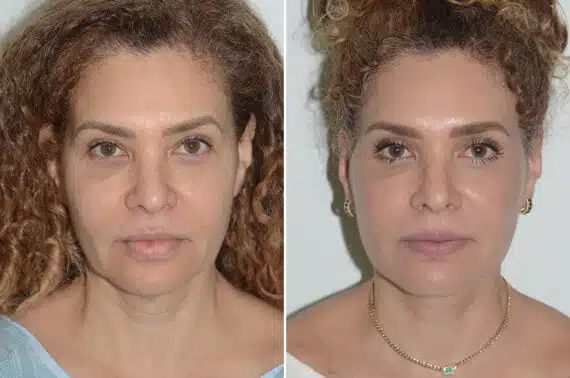
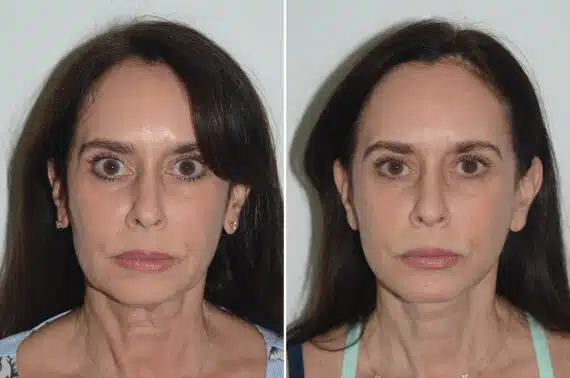
Each patient is unique and individual results may vary*.
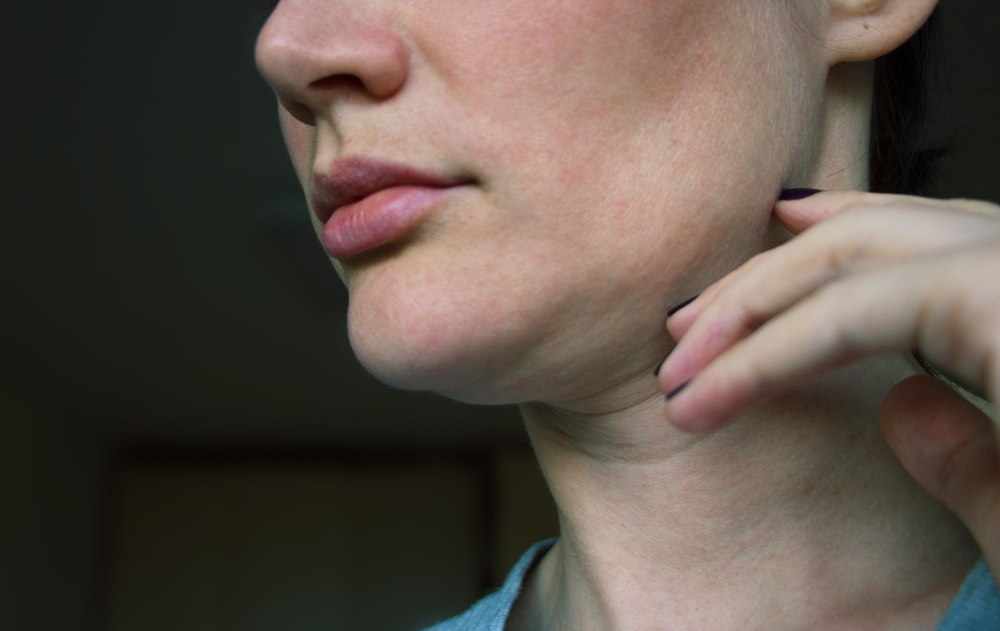
How Aging Affects Facial Structure
Facial aging is influenced by changes in bone support, fat distribution, collagen levels, and the strength of facial ligaments. Over the years, the ligaments that stabilize the cheeks and midface begin to loosen, allowing the facial tissues to descend. This leads to pronounced nasolabial folds, early jowling, and softening of the jawline. Skin laxity, thinning of the facial muscles, and reduced collagen contribute to these visible changes. These structural shifts, rather than chronological age alone, largely determine when surgical treatments such as a deep plane facelift may be appropriate.
Questions About Deep Plane Facelift Surgery?
Schedule a consultation with Dr. Andres Bustillo.
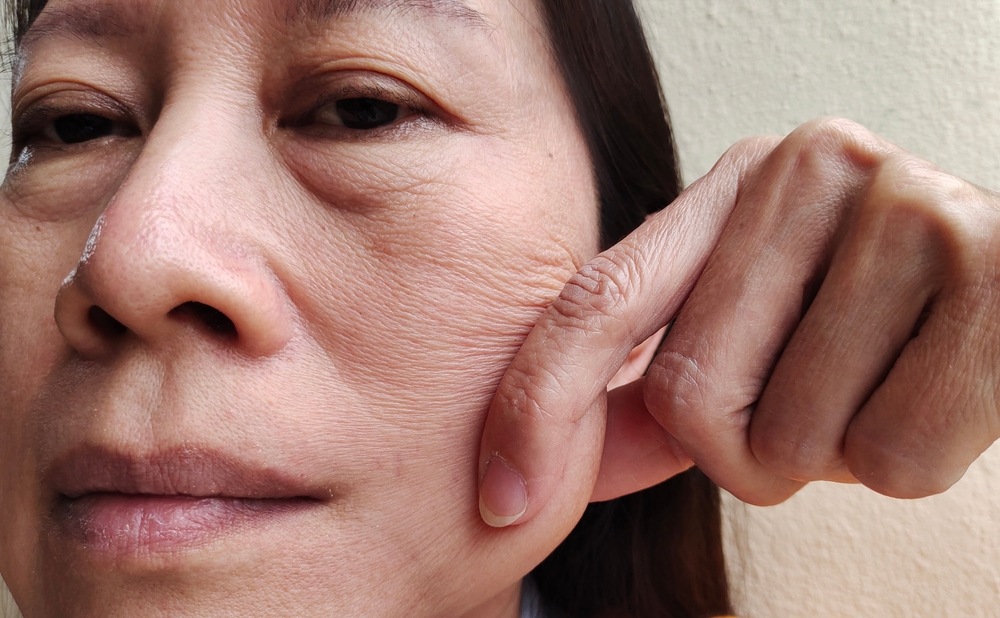
Signs You May Be Ready for a Deep Plane Facelift — Regardless of Age
Certain changes in facial structure indicate that a deep plane facelift may be appropriate, independent of age:
- Sagging of the cheeks or midface
- Pronounced nasolabial folds
- Formation of jowls
- Loss of jawline definition
- Laxity in the neck or excess skin
- Desire for a long-lasting solution instead of temporary cosmetic procedures
These structural changes provide a clearer indicator of readiness than chronological age alone.
Factors That Influence the Right Age
Several factors help determine when a deep plane facelift may be appropriate:
- Facial anatomy and degree of tissue descent
- Hereditary patterns of aging
- Skin thickness and collagen levels
- History of cosmetic procedures
- Overall health and safety considerations
- Lifestyle factors that influence aging, such as sun exposure or smoking
Evaluating these elements often provides a more accurate picture than relying on age alone.
Why Deep Plane Facelift Surgery Is Often Preferred as We Age
As the deeper facial tissues shift with time, techniques that address only the surface layers or tighten the skin without lifting the deeper structures may offer limited improvement. Deep plane facelift surgery repositions the facial tissues in a more anatomical way, restoring youthful contours to the cheeks, jawline, and neck. Because it works with the deeper facial layers and releases retaining ligaments, this method often produces more natural and longer-lasting results compared to more superficial facelift options.
When a Deep Plane Facelift Isn’t the Best Option
In some cases, a deep plane facelift may not be the most appropriate choice. Patients with minimal tissue descent may benefit more from a mini facelift or non-surgical facial rejuvenation options such as dermal fillers or skin resurfacing. Medical conditions that increase surgical risk may also influence candidacy. Patients with unrealistic expectations or those seeking changes not achievable with surgery may be better suited for alternative treatments.


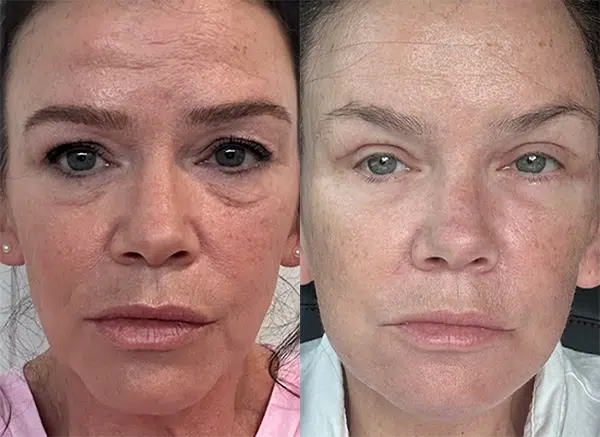
Patient: Tracy
Visit Type: Facial Rejuvenation Surgery
- Deep Plane Facelift (Left)
- Eyebrow Lift
- Upper Eyelid Surgery (Upper Blepharoplasty)
Case Study
Deep Plane Facelift with Eyebrow Lift and Upper Blepharoplasty
Complementary Procedures by Age Group
In Your 40s
Patients in their 40s often benefit from treatments that address early signs of facial aging, such as fat grafting to restore facial volume, eyelid surgery for upper or lower eyelid concerns, or skin resurfacing to improve skin tone and texture. Some may opt for a limited lift if early laxity is present.
In Your 50s
By the 50s, combining a deep plane facelift with a neck lift, eyelid surgery, or fat grafting can provide more comprehensive facial rejuvenation. These additions address multiple aspects of aging at once, helping to create harmonious results.
In Your 60s+
Patients in their 60s and beyond often combine deep plane facelift surgery with surgical solutions that address advanced signs of aging, such as a neck lift or brow lift. Enhancing skin quality through resurfacing can also improve overall results, especially when excess skin or textural changes are present.

Why Choose Dr. Andres Bustillo
Dr. Andres Bustillo is a double board-certified facial plastic surgeon with decades of experience devoted exclusively to facial surgery. Known for his precise, anatomy-based approach, he specializes in advanced techniques such as the Deep Plane Facelift, with an emphasis on natural movement, long-lasting results, and patient safety. Credentials include:
- Double board-certified in facial plastic surgery and head & neck surgery
- Fellowship-trained in facial plastic & reconstructive surgery
- Over 20 years focused exclusively on facial procedures
- Recognized for natural, refined facial rejuvenation results
What to Expect During Your Consultation
During the consultation, Dr. Bustillo conducts a detailed evaluation of the facial structures, including the deep tissues responsible for aging changes. He assesses skin quality, facial muscles, the position of the cheeks and jawline, and the degree of neck laxity. This thorough examination helps determine which facelift options are most appropriate. Patients are given clear information about expected results, recovery, side effects, and long-term benefits to ensure informed decision-making.